The First-Ever Image of The Black Hole at The Center of The Milky Way
Play below for the audible version of this article:
Four and a half billion years ago, our pale blue dot was born in the rubble left over from the birth of a star. Since then, we’ve been locked in a cosmic dance; Earth whirls around the Sun; and the Sun whirls around the galactic center – the dark, mysterious heart of the Milky Way.
Contained in that dark heart, around which the entire galaxy revolves, is a supermassive black hole named Sagittarius A*, clocking in at roughly 4.3 million times the mass of the Sun. We’ve been able to infer its presence, and measure it, based on the movements of objects around it, but never had we seen the object itself.
That image at the top of the screen – looking like a glorious blurry orange donut – is the dust around and shadow of Sgr A* itself, seen by humanity for the very first time, thanks to the hard work of the Event Horizon Telescope collaboration.
“We were stunned by how well the size of the ring agreed with predictions from Einstein’s Theory of General Relativity,” said EHT Project Scientist Geoffrey Bower of Academia Sinica in Taipei.
“These unprecedented observations have greatly improved our understanding of what happens at the very center of our galaxy, and offer new insights on how these giant black holes interact with their surroundings.”
The achievement comes three years after the collaboration released the first image of a black hole’s shadow ever obtained – a supermassive black hole named M87*, clocking in at 6.5 billion times the mass of the Sun, at the center of a galaxy 55 million light-years away.
Sgr A* is considerably closer to us, at a distance of around 25,800 light-years. But the two black holes presented very different challenges.
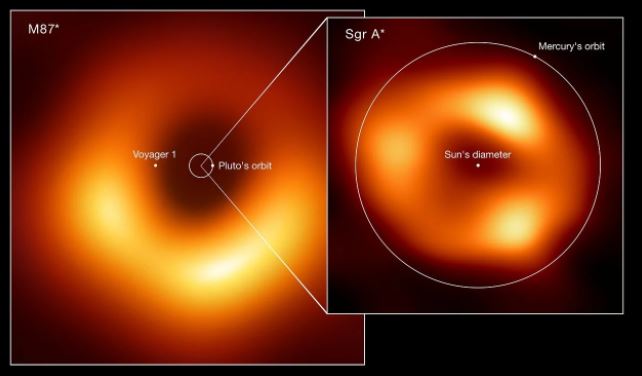
Attempting to image a black hole is attempting to image the invisible. Black holes give off no radiation we can detect. They’re so dense that, past a certain point known as the event horizon, not even light, the fastest thing in the Universe, is able to achieve escape velocity from their gravitational pull.
M87* is what we refer to as an active galactic nucleus. That means it’s feeding – surrounded by an enormous disk of dust and gas that is getting pulled into the black hole. The insane friction and gravity involved heats this material so that it glows brightly. That’s what we see in the picture of M87*, with the shadow of the black hole in the center of the glowing material. Sagittarius A* may be closer… but it’s nowhere near as active. In fact, if Sgr A* were a person, it would only consume the equivalent of a grain of rice every million years.
Moreover, the Milky Way galactic center is thick with dust that obscures much of what is contained therein.
Scientists had previously detected a cloud of gas orbiting Sgr A*, an accretion disk of the black hole’s very own, but it’s relatively cool and glowing much more faintly. Moreover, because the black hole is smaller, the disk’s orbital period is smaller, which means the light changes on very rapid timescales.
“The gas in the vicinity of the black holes moves at the same speed – nearly as fast as light – around both Sgr A* and M87*,” said astronomer Chi-kwan (‘CK’) Chan of the University of Arizona.
“But where gas takes days to weeks to orbit the larger M87*, in the much smaller Sgr A* it completes an orbit in mere minutes. This means the brightness and pattern of the gas around Sgr A* was changing rapidly as the EHT Collaboration was observing it – a bit like trying to take a clear picture of a puppy quickly chasing its tail.” Within, something shines brightly in radio wavelengths – that would be Sgr A*, but we’d never been able to obtain a detailed view of it.
To overcome these challenges, the Event Horizon Telescope combined eight telescopes from around the world, which worked together in what is essentially an Earth-sized telescope, with spectacular resolution.
A large number of images were taken during an observing campaign in 2017, producing six terabytes of data. These data had to be processed and analyzed – a process that took years, and the development of new algorithms to compensate for the rapid changeability.
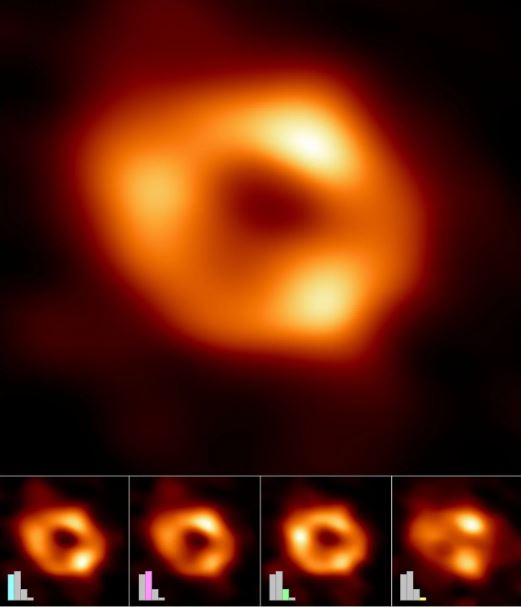
The images were grouped into four classed based on similar features, which you can see at the bottom of the image above. The bar graphs show the relative number of images belonging to each cluster.
Scientists are going to be chewing over the incredible results for some time to come. Supermassive black holes are a cosmic mystery. We don’t know how they manage to get so big – Sgr A* is actually pretty titchy for one of these behemoths – or how they formed in the first place, at the dawn of time. They are, however, major drivers in the evolution of the cosmos. Entire galaxies swirl around them; they control star formation, even outside their own galaxies.
The supermassive black holes that we usually study are active, like M87*. That’s because the material in the space around them emits light, and the magnetic fields of the black holes can accelerate jets into intergalactic space, both of which can tell us about the black hole itself.
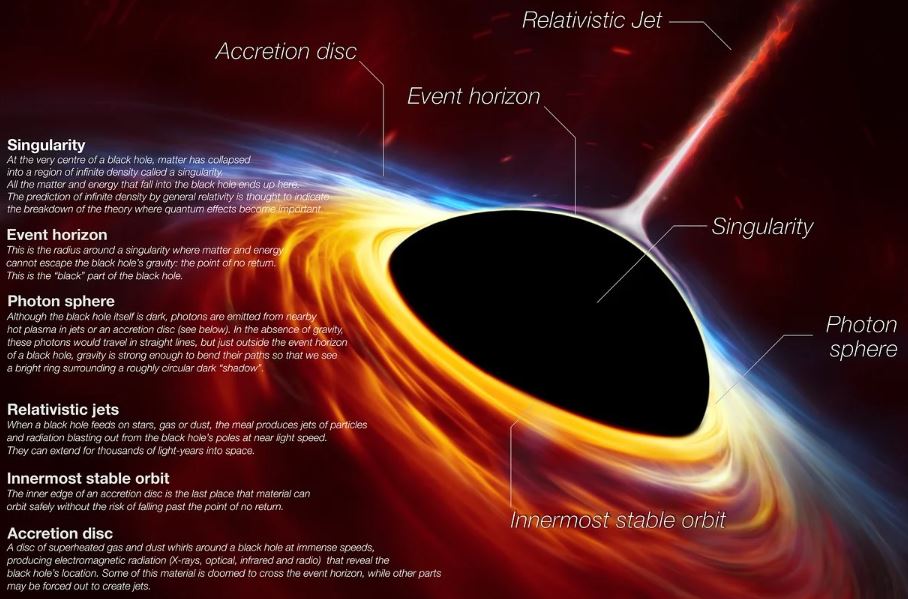
Sgr A*’s quiescence may have made it more challenging to image, but that very characteristic makes it extraordinary as an object of study. Because it’s not blazing with light like a more active black hole, we might be able to see the environment around it a little more clearly, which in turn might give us a better window into event horizon physics.
This could help us understand all sorts of black hole mysteries, such as how accretion works, how jets are launched, even whether general relativity has accurately described the extreme space-time in the vicinity of a black hole.
Fascinatingly, the two black holes appear very similar. This, the researchers said, means we can make certain inferences about black holes.
“We have two completely different types of galaxies and two very different black hole masses, but close to the edge of these black holes they look amazingly similar,” said astronomer Sera Markoff of the EHT Science Council the University of Amsterdam in the Netherlands.
“This tells us that General Relativity governs these objects up close, and any differences we see further away must be due to differences in the material that surrounds the black holes.”
The new image opens up a new door for studying these extreme objects. One image of a black hole is amazing. Two means that not only was that first result real, we now have a point of comparison to understand how these incredible, extreme objects operate.
“Now we can study the differences between these two supermassive black holes to gain valuable new clues about how this important process works,” said astrophysicist Keiichi Asada of Academia Sinica.
“We have images for two black holes – one at the large end and one at the small end of supermassive black holes in the Universe – so we can go a lot further in testing how gravity behaves in these extreme environments than ever before.”
The new results have been published in a special issue of The Astrophysical Journal Letters.
SpaceX, Humanity on the Mars before the end of the 2020s
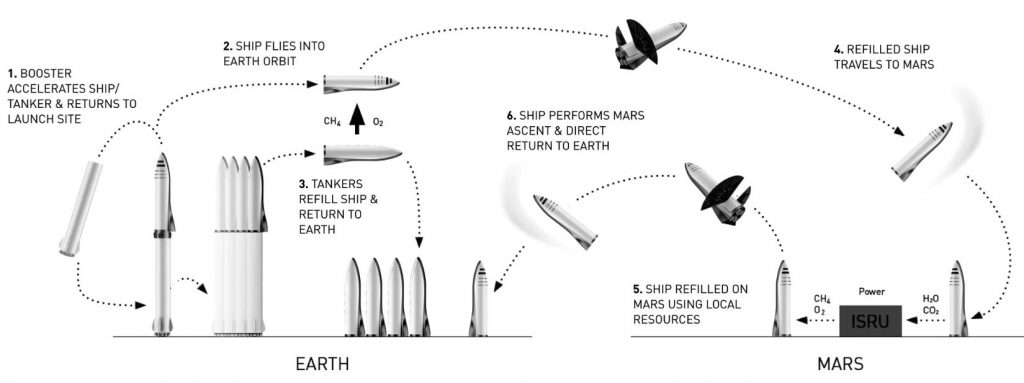
Visitors to the Red Planet will reach it aboard SpaceX’s Starship.
Play below for the audible version of this article:
In December 2021, Elon Musk predicted that humans will be on Mars within a decade. Now, SpaceX President and Chief Operating Officer Gwynne Shotwell told CNBC‘s Shepard Smith on Saturday that humanity will touch the ground on the Red Planet before the end of the 2020s. “I think it will be in this decade, yes. People on the moon, sooner,” Shotwell said.
“I think we need to get a large delivery to the surface of Mars, and then people will start thinking harder about it,” she added. “And then, I think within five or six years, people will see that that will be a real place to go.” How do the ambitious executives plan to make it to Mars? Aboard their new ship: Starship.
Starship is designed to be the first reusable spacecraft that will be able to take crew and cargo to the Moon and Mars before returning to Earth and it is so advanced that it supposedly has got the competition worried.
Elon Musk/SpaceX; New Space/Mary Ann Liebert, Inc. Publishers
A first-ever orbital test flight
SpaceX is working toward the vehicle’s first-ever orbital test flight, which the company wants to launch from its South Texas facility, called Starbase, at a quickly approaching date. However, for that launch to occur, the U.S. Federal Aviation Administration (FAA) has to complete an environmental review of the activities at Starbase.
That assessment was originally supposed to be finished by the end of 2021, but the FAA has delayed it on several occasions. It’s now targeting a May 31 submission.
That doesn’t mean that Starship has no mission planned.
In 2018, Japanese billionaire Yusaku Maezawa confirmed that he booked the vehicle to do a round-the-moon trip for 2023. Meanwhile, NASA chose Starship to be the first crewed lunar lander for its Artemis program in 2025, its mission that aims to explore the moon’s south pole.
‘Air Shield’ tech aims for virus protection on airplanes
Central WA firm’s ‘air shield’ tech aims for virus protection on airplanes
Play below for the audible version of this article:
Air travelers are returning to the skies and U.S. planes are now typically flying full and with many passengers not wearing masks — a worry for those most vulnerable to COVID-19 infection.
Pexco Aerospace, based in Union Gap in Central Washington, plans to offer a solution for airlines that could be ready to fly next year.
It has partnered with Seattle-based Teague, a leading design firm, to produce a simple snap-on plastic component that creates an “air shield” system it touts as increasing protection of airline passengers from virus transmission.
“There are still a lot of people concerned about air safety,” said Jon Page, president of Pexco. “We hope this will give people some peace of mind.”
Pexco, a unit of multinational aerospace conglomerate Transdigm, employs about 200 people in Union Gap, Yakima County, manufacturing plastic parts and trim for airplane cabin interiors, such as lighting and stow bin components and covers for the seat tracks.
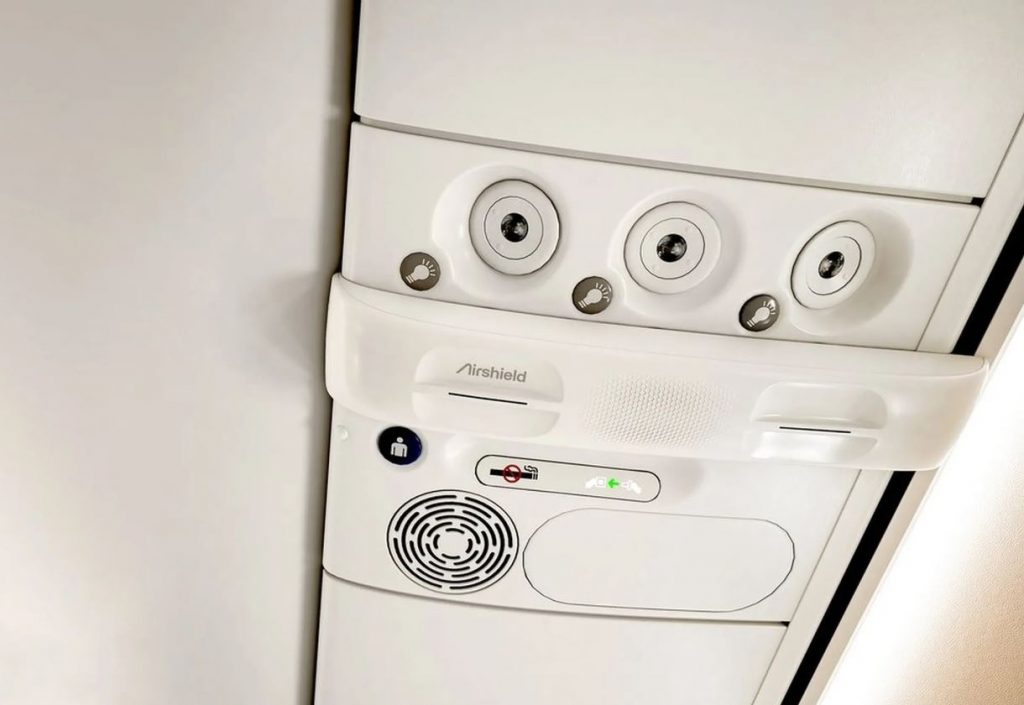
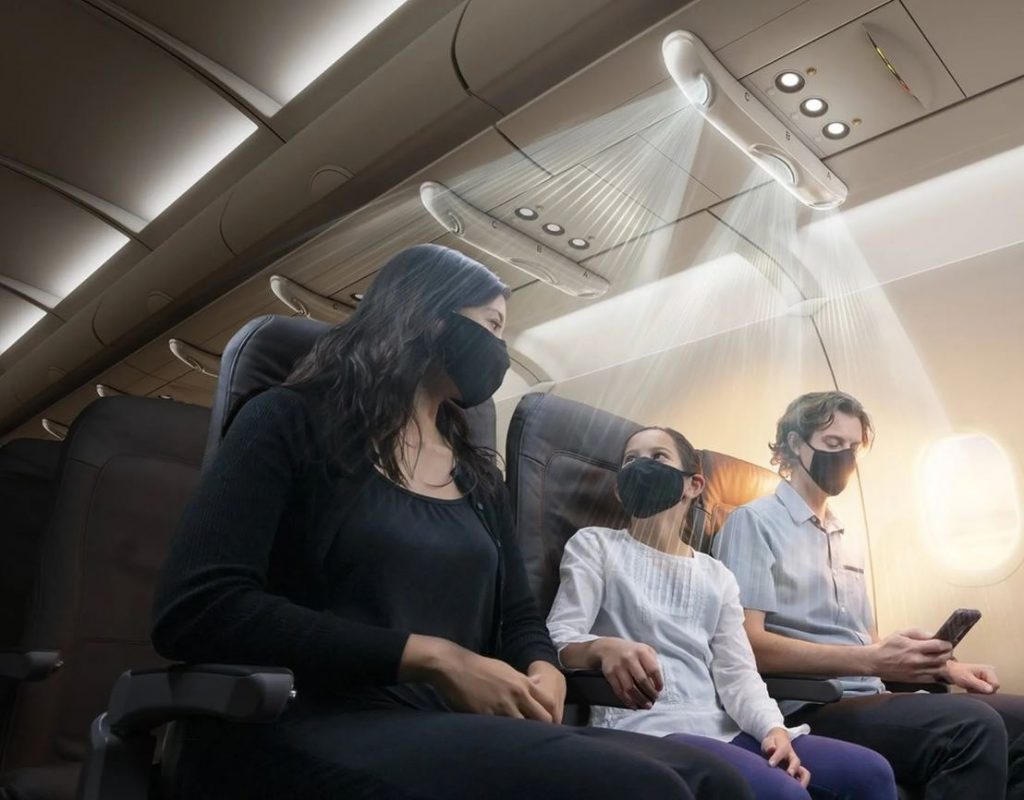
The new product, a concept developed by Teague in 2020, is a plastic component that fits over the overhead air vents above each row of passenger seats and redirects the air stream.
Instead of a cone of air flowing onto a passenger’s head from a pinhole above, several thin, curved slots in the plastic transform the flow into a curved “curtain” of fresh air that surrounds the passenger at the side and in front.
The idea is that air breathed out by the passenger, even a cough or a sneeze, will be directed downward by the air stream to the cabin’s outflow vents at the floor level.
Pexco said its tests show the system reduces shared air particles between neighboring passengers in an economy cabin by 76%.
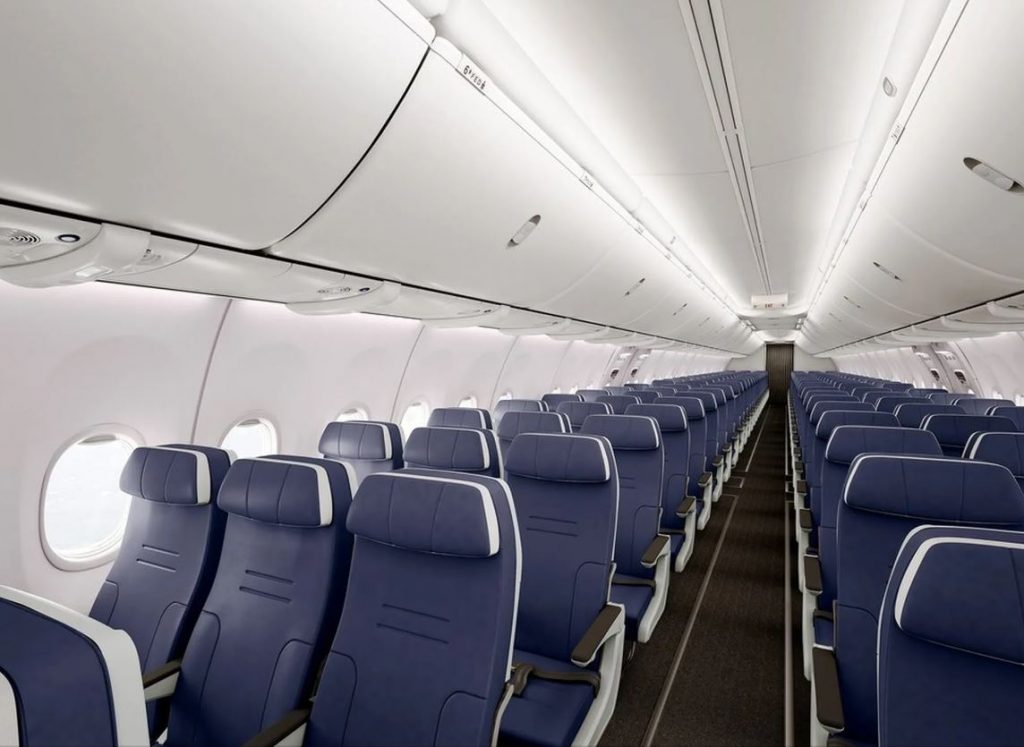
It’s designed to be easily retrofitted to a Boeing 737 or an Airbus A320.
Page said Pexco has worked with Alaska Airlines and Southwest Airlines to develop and test the system and is in the final stages of getting Federal Aviation Administration certification.
He said with just a final smoke test to be completed the system could be certified this summer and installed on the first airliners next year.
Lockheed Martin tests new hypersonic weapon concept
The missile prototype cruised at five times the speed of sound ‘for an extended period.’
Play below for the audible version of this article:
A Lockheed Martin hypersonic missile prototype flew at five times the speed of sound “for an extended period” during a recent successful technology test for the U.S. military.
The hypersonic weapons test, which was announced April 5 by the Defense Advanced Research Projects Agency (DARPA), marked the second flight for the Hypersonic Air-breathing Weapon Concept (HAWC) program following a September 2021 test by Raytheon Technologies, DARPA officials said in a statement.
Program officials framed the new flight as a major milestone in the hypersonic program, which aims to conduct military operations at swifter speeds and with higher effectiveness compared to what’s currently available. “We are still analyzing flight test data, but are confident that we will provide the U.S. Air Force and Navy with excellent options to diversify the technology available for their future missions,” said Andrew Knoedler, DARPA’s HAWC program manager for the tactical technology office, in the statement.
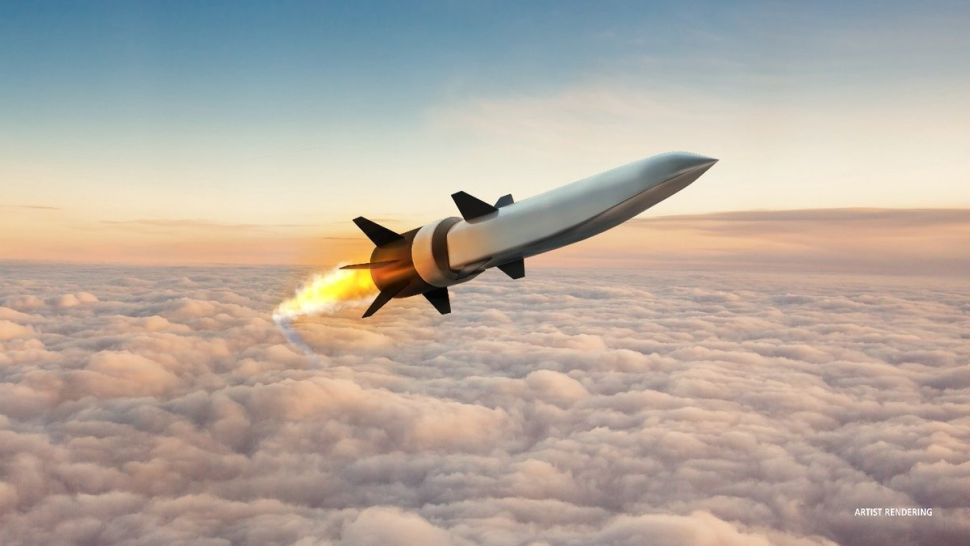
A press release from Lockheed noted the vehicle reached an altitude of 65,000 feet (nearly 19,812 meters), which is double the cruising altitude of a typical commercial flight. The vehicle will “address rapidly emerging threats in the global security arena,” John Clark, vice president and general manager of Lockheed Martin Skunk Works, said in his company’s statement.
DARPA and the U.S. Air Force are jointly working together on funding and supporting the HAWC program. Raytheon and Northrop Grumman together disclosed $200 million in funding for the project in 2019, while Lockheed Martin received nearly $1 billion in 2018, according to DefenseNews.com.
The program is seeking to assess feasibility, effectiveness and affordability across a series of flight demonstrations, and is by no means the first effort by U.S. military officials to work on hypersonic systems, either crewed or uncrewed.
A selection of other programs of hypersonic speeds include the 1950s-era X-20 Dyna-Soar that was designed to launch on a rocket, the FALCON hypersonic program (short for Force Application and Launch from CONtinental United States) of the early 2000s and Blackswift, which was later canceled.
How engineers are preventing icing on new types aircraft
Play below for the audible version of this article:
Weather conditions affect flight performance and safety and airframe icing is one of the most dangerous. Ice on airframes can cause severe aerodynamic and flight mechanical effects, significantly increasing the risk of flying.
How icing affects an aircraft’s performance and ways to mitigate the impact of icing on airframes is a major area of R&D. The recent improvements in battery technology are leading to new types of aircraft that need icing protection. Ice protection company CAV Systems’ engineering, product development and delivery vice president, Alexander Baty says, “There is more interest in urban air mobility. We are seeing a lot of interest from startup companies.
“Electrical power is obviously a precious commodity for those guys. It makes their options in terms of ice protection fairly limited.”
eVTOL aircraft and drone developers commonly use computational fluid dynamics (CFD) simulation tools during design to optimize airframes ahead of Type Certification.
“Typically in my laboratory we are improving the 3D CFD codes that are used by all the manufacturers, once they take a vehicle design to start the certification process,” says Steve McClain, mechanical engineering professor at Baylor University.
NASA’s LEWICE, (Lewis Ice Accretion prediction Code) was developed decades ago and became the standard ice accretion prediction code for certification analysis, especially for companies in the USA. LEWICE was first developed as 2D code, so only describes the air immediately above the airframe’s surface, the boundary layer (See box Lewice & Glennice).
McClain’s laboratory at Baylor University seeks to improve the fundamental knowledge of the ice accretion process and provide more accurate data for the CFD software.
“We are trying to capture the physics of icing in more detail so that manufacturers can have more confidence in predictions from LEWICE.
“With everything going to CFD nowadays, NASA is developing GlennICE, but it has a lot of other competitors in the field. There are other tools out there,” McClain says.
Another major effort to develop computer simulation tools for icing is the four-year European Union (EU) SENS4ICE project. SENS4ICE is expected to be completed next year with several flight tests. Some flight testing has already been conducted using a Russian Yakovlev Yak-42 aircraft which was carrying atmospheric test sensors.
The importance of icing research is underlined by the number and international range of partners SENS4ICE has. As well as the EU partners of Germany’s DLR and Italy’s Centro Italiano Ricerche Aerospaziali (CIRA), Russia and the USA are both participating in the project, while Honeywell and Collins Aerospace are also both involved.
Test equipment development
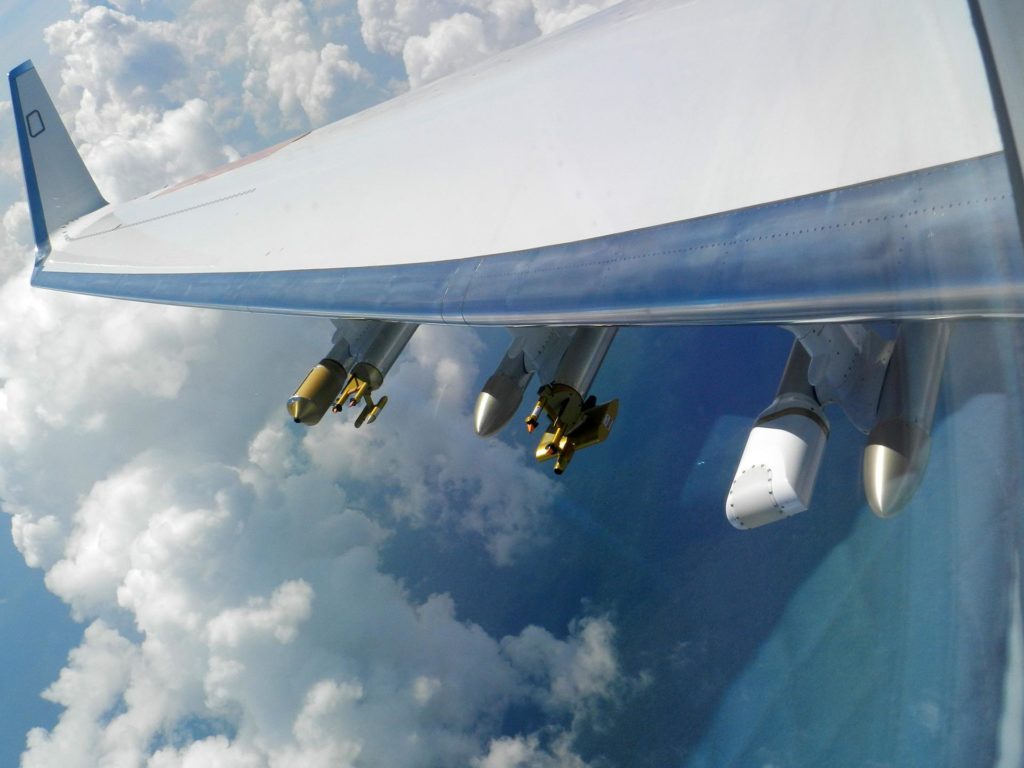
The aircraft testing equipment was developed during the first part of the project explains Carsten Schwarz, SENS4ICE coordinator. Schwarz leads the flight mechanics group at the DLR Institute of Flight Systems, Department of Flight Dynamics and Simulation. Super cooled large droplet icing is SENS4ICE’s focus and the project has several different approaches to testing for that.
“For this specific icing condition, we have quite a large number of sensors that are developed from different technologies. Some of those technologies have started at a very low technology readiness level and some were more advanced,” Schwarz says.
He explains that one of the technologies being used takes an optical approach. This detection technology is called shadography and involves the detection of droplets visually in images. Super cooled droplets are also important to McClain’s work at Baylor, which seeks to improve understanding of the physics of how droplets accrete on an aircraft’s surface.
“Once you have super cool droplets hitting the aerofoil, knowing the physics that happens on the surfaces and that freezing process and when it freezes is important knowledge. That’s what I’ve been doing for the past decade with NASA,” McClain says.
People may be surprised that icing is a problem that has not been solved, and McClain recognizes that it has been studied for many decades. He adds, “It is a really hard problem. It’s a multi-phase multi-species, transient non-equilibrium thermodynamics problem. Getting the amount of water that hits a specific location on the aircraft surface over a matter of a time is still a difficult computational task.”
One of the testing technologies devised uses microwaves to measure the surface accretion.
Despite the widespread availability of super computing resources, the underlying physics that the test equipment is based upon is still limited.
“Most of the heat transfer measurements that I do at Baylor are still what are called dry measurements,” McClain explains. “So, we look at something like a scale roughness model and consider how that affects the dry heat transfer and make some assumptions about what goes on when you have a multi-phased situation on a real ice surface.”
The droplets are treated as having a “quasi equilibrium,” at a temperature near zero degrees Celsius. The quasi equilibrium means there is liquid, vapor and ice present. The phenomena occurring on the aircraft’s surface is that it absorbs what little heat is in the super cooled droplet and that droplet becomes an ice particle. As droplets strike the surface, or other ice particles, accretion occurs. Laboratory work focuses on better understanding that heat transfer process to be able to make better predictions for the simulation software.
Surface roughness
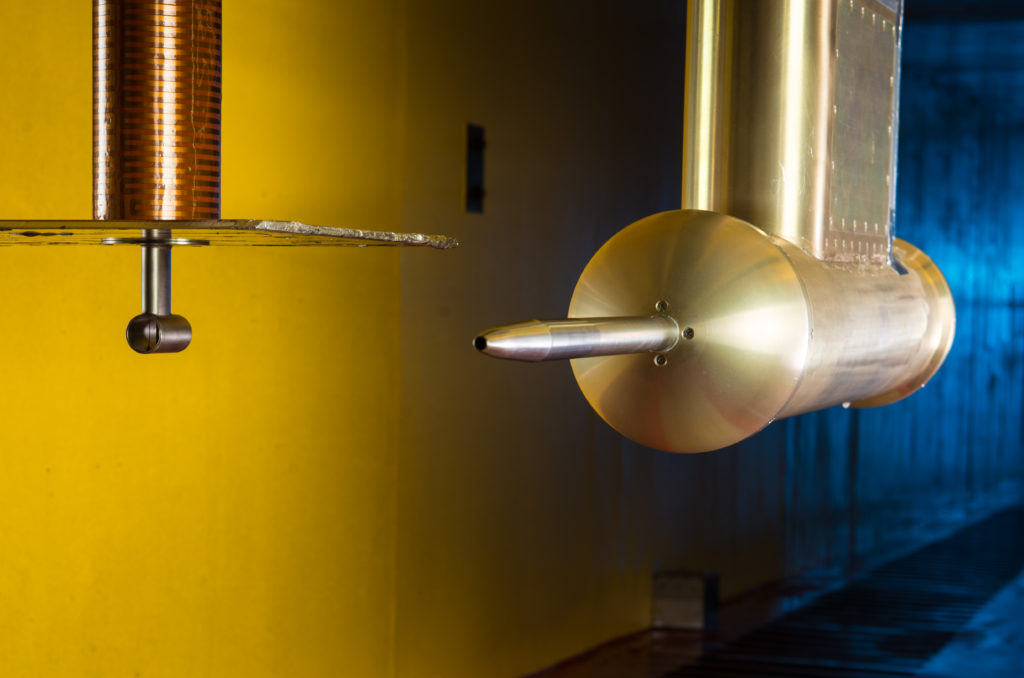
As the icing grows, the aircraft’s surface grows increasingly rough. “The roughness then affects the convective heat transfer,” McClain explains.
Characterizing the existing roughness, measuring the temperatures at the surfaces, measuring the developing roughness over time – the testing technology is needed to determine how the heat transfer is affected. To stop that accretion an established solution for airliners and other large aircraft is to use electrical heating. McClain sees more research going into icing countermeasures for eVTOL aircraft.
“Most of the research that I see today is all about the urban mobility-scale aircraft and the small air vehicles. And what do you do there? Quite frankly, the power excess to power the heating elements to get through weather is not as significant as a large commercial airliner,” McClain explains. The solutions that have been used for airliners and down to the size of general aviation’s two to four person aircraft have been electrical heating or fluids seeped onto surfaces.
However, eVTOL aircraft and drones, because of their small size, new designs and use of battery electric power supplies pose challenges to the use of most existing icing mitigation technologies on the market.
“We’ve looked quite significantly at electrothermal systems. They are used on the Boeing 787, but it was found that you need quite a large amount of electrical energy to provide full protection over the entire flight envelope,” says Baty. “We have done quite a lot of work on electrothermal systems, including work which has partially developed some capability ourselves, although we don’t have anything on aircraft.”
Fluid systems are an alternative to large electrical power requirements. While carrying a tank of anti-icing fluid would seem to be a problem for drones or eVTOLs with limited payload capacities, these aircraft do not fly for very long.
“With these aircraft, their flight endurance is low. We don’t need as big a tank of anti-icing fluid as on traditional aircraft. We’re seeing more interest from other areas. The first example would be military drones, things like the General Atomics Aeronautical Systems Predator B. We’ve done three or four different systems on those types of aircraft.”
For drones, CAV Systems is trying to miniaturize its product. “We’re looking at ways to distribute fluid around the airframe without adding weight to the systems and avoid pumps,” says Baty.
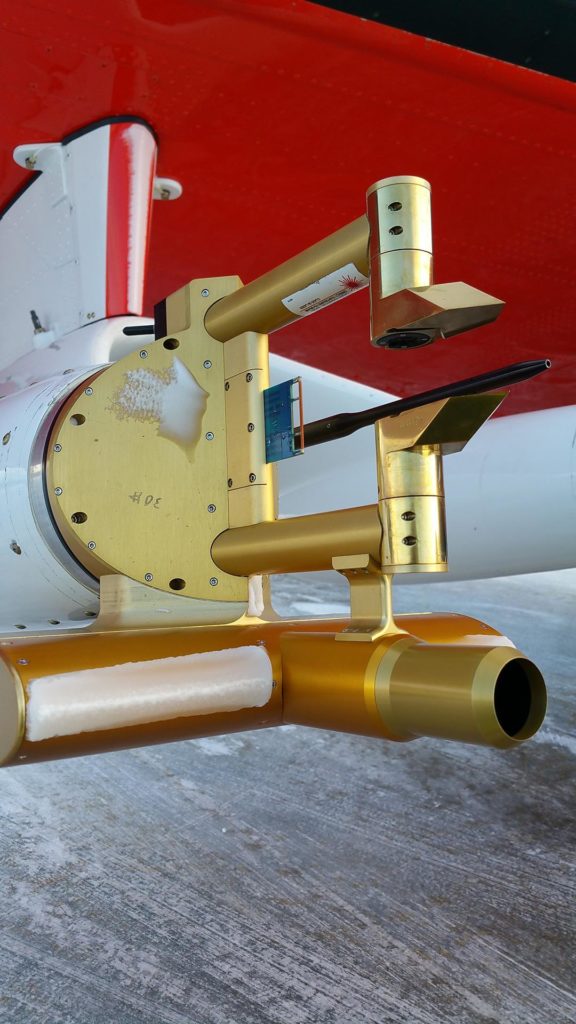
CAV Systems is aiming to flight test later this year a miniaturized systems on a commercially available drone which has a payload capacity of 12kg (26 lbs). Baty’s firm has also used icing wind tunnels (See box Creating icing conditions) in collaboration with partner organizations.
SENS4ICE is also using “several icing wind tunnels,” according to Schwarz. “All our sensors have been tested in icing wind tunnels.”
Sensors will be needed for the greater automation expected for icing systems. With no pilot aboard eVTOLs, even passenger carrying eVTOL services, and drones, the detection of ice and countermeasure activation needs to be automated. For airliners, the use of icing mitigation systems needs to be automated to avoid adding to the workload of a pilot.
“We’d really like to improve the capability of our autonomous system for eVTOL aircraft and OEMs like Airbus and Boeing,” says Baty.
Automation, detection, analysis, electrical heating or fluids, the mitigation of ice needs a variety of technologies all of which require further development as air transport advances.
Whether it is icing wind tunnels or Russian flying testbeds, the research work continues to solve this decades long challenge, which faces air transport old and new, piloted and autonomous.
LEWICE and GlennICE
NASA Lewis Ice Accretion Prediction Code (LEWICE) is a software program for predicting ice shapes, collections efficiencies, and anti-icing heat requirements.
LEWICE does not need a supercomputer, it can be run on a desktop computer, allowing users to run many parameter studies for their aircraft designs.
LEWICE models are used to calculate the ice growth rate at each point on the surface of a geometry. By specifying an icing time increment, the ice growth rate can be interpreted as an ice thickness which is added to the body.
This procedure is repeated, beginning with the potential aerodynamic flow calculations, until the desired icing time is reached. The ice shape predictions have been used to assess aircraft performance degradation both as an input to a CFD program or experimentally in flight or in a wind tunnel. The ice shape predictions have been validated against a wide variety of experimental conditions.
NASA Glenn Research Center is developing the software tool GlennICE to predict ice formation on aircraft and inside aircraft engines.
The goal for GlennICE is software that can accurately predict ice growth under any meteorological conditions for any aircraft surface.
The testing being undertaken for it is to understand the relationship between the roughness produced by the ice growth and the subsequent enhancement of the heat transfer creating the ice.
An extensive comparison has been performed against the ice shape database that has been generated in the Glenn Research Center Icing Research Tunnel.
Creating Icing Conditions
Icing wind tunnels allow researchers to create realistic realistic icing conditions to provide data on how effective ice protection equipment is and how ice adheres to any material.
The data from icing wind tunnels helps the development of ice accretion modeling tools. These are used by aircraft designers to assess the potential impact of ice on flight and engine performance.
Icing wind tunnels use ice spray bar modules and equipment to calibrate the chamber’s temperatures and ice produced by the bars. A spray bar module can have 50 nozzles producing the vapor cloud that will encounter the test piece. The modules, of which there can also be dozens, will be located many metres upstream of the test chamber itself. This distance is required for the spray bar’s cloud of droplets to become super-cooled even when the droplets are produced at a large size.
The tunnels temperature can go as low as minus 40˚C (104˚F) and a static pressure of up to 1.45 bar. The altitudes that can be simulate range from sea level to 23,000 feet and more. Such tunnel facilities can also have droplet tunnels. These are used to examine how droplets behave when the strike aircraft at high speed. The highly precise examination of droplets in air flow and how they deform and attach to surfaces can help researchers engineer surfaces to mitigate against accretion.
A new system could generate usable oxygen and fuel from lunar soil
Play below for the audible version of this article:
We’re edging closer to livable conditions on the moon.
Last year, an instrument on NASA’s Perseverance rover on Mars made oxygen from the Red Planet’s carbon dioxide atmosphere. Performed by Moxie – the Mars Oxygen In-Situ Resource Utilization Experiment – the strategy definitely incited hope for extraterrestrial survival. Future human missions could take versions of Moxie to Mars instead of carrying oxygen from Earth to sustain them.
But, Moxie is powered by a nuclear battery onboard. “In the near future, we will see the crewed spaceflight industry developing rapidly,” said Yingfang Yao, a material scientist at Nanjing University.
And, long-term survival on the moon shall be a turning point in manned deep space exploration. “Just like the ‘Age of Sail’ in the 1600s when hundreds of ships head to the sea, we will enter an ‘Age of Space.’ But if we want to carry out large-scale exploration of the extraterrestrial world, we will need to think of ways to reduce payload, meaning relying on as little supplies from Earth as possible and using extraterrestrial resources instead,” he continued.
Yao and Zhigang Zou, another material scientist at Nanjing University, explore whether lunar resources can be used to facilitate human exploration on the moon or beyond.
They published a study in the journal Joule, reporting that soil on the moon contains active compounds that can convert carbon dioxide into oxygen and fuels.
What does the moon have in store for us?
There’s no air to breathe on the moon. However, several elements such as argon-40, helium-4, oxygen, methane, nitrogen, carbon monoxide, and carbon dioxide have been detected in the lunar atmosphere.
While Earth-based spectrometers have detected sodium and potassium, the Lunar Prospector Orbiter found radioactive isotopes of radon and polonium. In 2012, the Lunar Reconnaissance Orbiter detected helium.
Meanwhile, the lunar regolith has been formed by meteorites’ constant impact, which has pulverized underlying coherent rock. All material sampled from lunar cores has shown evidence residing at the surface.
The layers of the regolith comprise meteorite, solar particles, and cosmic-ray bombardment. And the exposed surface layers contain implanted solar material such as rare gases and elements transported from the sun in the solar wind. In rocks of the moon, oxygen is the most abundant chemical element.
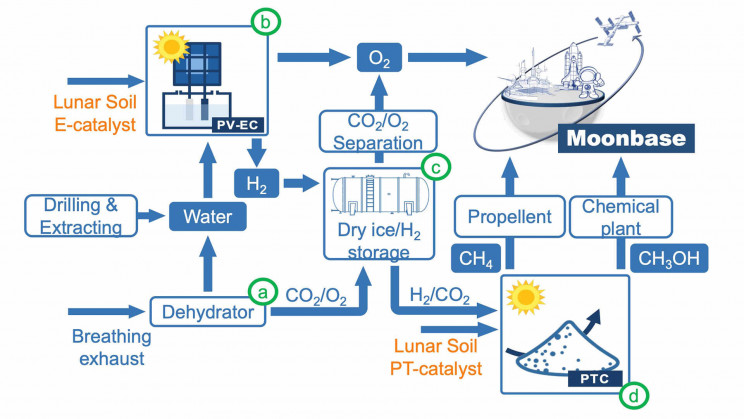
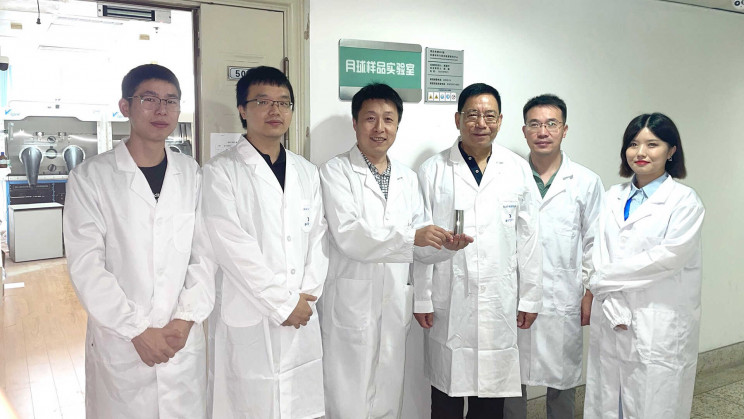
Here, Yao and Zou hope to design a system that employs lunar soil and solar radiation, the two most abundant resources on the moon. Their team analyzed the lunar soil brought back by China’s Chang’e 5 spacecraft and found the sample to contain compounds such as iron-rich and titanium-rich substances that could work as a catalyst to make desired products such as oxygen using sunlight and carbon dioxide.
The proposed strategy? “Extraterrestrial photosynthesis”. The system would use lunar soil to electrolyze water extracted from the moon and into astronauts’ breathing exhaust into oxygen and hydrogen-powered by sunlight. The carbon dioxide exhaled by moon inhabitants would also be collected and combined with hydrogen from water electrolysis during a hydrogenation process catalyzed by the lunar soil.
This process generates hydrocarbons such as methane which could be used as fuel.
Extraterrestrial survival is close
According to the researchers, the strategy utilizes no external energy but sunlight to produce water, oxygen, and fuel – desired products that could support life on a moonbase. The team is currently looking for an opportunity to test the system in space, likely with China’s future crewed lunar missions.
“We use in-situ environmental resources to minimize rocket payload, and our strategy provides a scenario for a sustainable and affordable extraterrestrial living environment,” Yao said.
Though the catalytic efficiency of lunar soil is less than catalysts available on Earth, the team is testing different approaches to improve the design, such as melting the lunar soil into a nanostructured high-entropy material, which is a better catalyst, Yao said.
Lunar soil or the components extracted from lunar soil can essentially reduce the load and cost of a spacecraft, thereby improving the feasibility and durability of human survival with ‘high economic efficiency, giving high hopes to future manned missions.
Startup Made a Functioning ‘Invisibility Shield’. Here’s How It Works
Play below for the audible version of this article:
Nearly all of us have wished to be a fly on the wall during a particularly juicy conversation, or disappear into the background after an embarrassing gaffe. It’s not surprising that invisibility cloaks are a mainstay of fantasy fiction.
In recent years, there have been many attempts to devise some sort of invisibility tech. Now, UK-based startup Invisibility Shield Co. has come onto the scene with a new product to help you fulfill that dream of becoming invisible… kind of.
As you can see in the images here, a person standing behind the shield truly does seem to disappear. This happens thanks to a really fun optical phenomenon called lenticular lensing, where a series of thin, cylinder-shaped lenses are arranged parallel on a surface.
There’s one common use for lenticular lensing you’ve likely encountered: in tilt cards which change the picture depending on angle.
.

A tilt card. (ScienceAlert)
Of course, using lenticular lensing will be a little more complicated when we’re talking about an entire invisibility shield, rather that just a postcard, but the basic principles are the same.
“Each shield uses a precision engineered lens array to direct much of the light reflected from the subject away from the observer, sending it sideways across the face of the shield to the left and right,” the startup writes on their Kickstarter for the product.
“Because the lenses in this array are vertically oriented, the vertically oriented strip of light reflected by the standing/crouching subject quickly becomes very diffuse when spread out horizontally on passing through the back of the shield. “
The lenses in this case are very similar to the rows of horizontal bumps on those tilt cards, but instead of light entering and exiting the card at different angles from the front, here light comes from behind the shield.
As it enters the array, light hitting the sides is stretched out to cover the entire surface, making the image behind it blurry. Meanwhile, the more central light from behind the shield, where the ‘disappeared’ object is, is reflected back and out the sides.
The shield is particularly good at maintaining the integrity of horizontal lines, but because the lenses on the shield are vertical, it’s less effective at showing vertical lines behind a person – instead creating a kind of smudge of background light. You can see this in the image below, where tiles disappear as much as the person, while the dark edge of the step appears intact.

“You can think of it like a waveguide that guides the rays around the object,” University of Adelaide metamaterial physicist Alex Dinovitser told ScienceAlert. In physics, waveguides can be thought of as structures that direct electromagnetic waves into a specific direction. Most commonly these are used in electronics (your microwave has a waveguide, for example), but optical waveguides exist as well.
The principles behind the product Invisibility Shield Co. is pitching on their Kickstarter have actually been around for several years. A 2019 showcase video by military stealth company Hyperstealth quickly inspired crafty folk on YouTube to try and replicate what they saw, with excellent success.
There is even a freely available instruction manual by engineer and YouTuber Ian Charnas on how to craft your own.
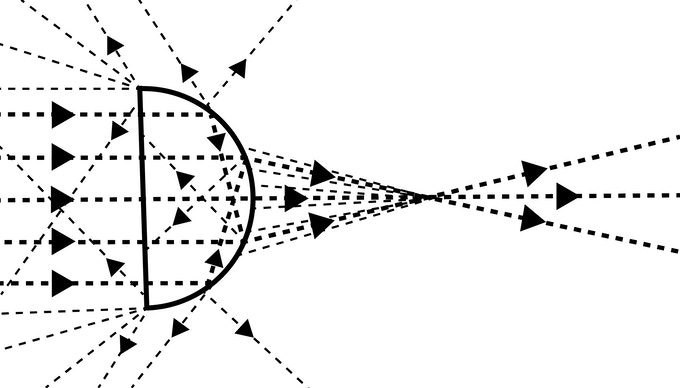
A diagram showing light entering and scattering off a single lens on the shield. (Invisibility Shield Co.)
Of course, this technology was not invented to just josh with your friends. Hyperstealth was marketed as an aircraft or tank obscuring device. Working in their favor is the fact that lenticular lensing like this works best the farther away you are from the lens. However, just visually cloaking something isn’t particularly helpful for military needs. Depending on what is tracking you, different obscuring devices would be required.
“There are lots of different technologies. For example, [this technology] is not the same as for making a plane invisible to radar,” Dinovitser told ScienceAlert.
“In that case, the surface is designed to completely absorb the radiation or light. For light, the best material for this is VantaBlack. It is not the same as invisibility cloaking where the light goes through and around.”
In all, this shield is just one consumer-oriented product, while ‘invisibility research’ has been happening for the last few decades, resulting in things like an invisibility cloak for sound, for electromagnetic waves, and even for visible light (if only in one color).
We can’t deny that the device sold by Invisibility Shield Co. certainly makes for fun internet content, whether that’s for tricking your dog or messing with your family.
The Flying V – The future of airplanes
Play below for the audio version of this article:
The designs of the most efficient and least polluting aircraft most ready to come true are all based on the classic structure in which passengers are housed in the fuselage and the wings support the engines and contain the fuel. But there are also ideas, some in an advanced stage of development, which propose more or less profound variations to this classic scheme, with the aim of obtaining aerodynamic advantages, lower fuel consumption and higher ranges. The most curious project is perhaps that of the “Flying V” or Flying V which was born from an idea of almost ten years ago formulated by Justus Benad, at the time a student of the Technical University of Berlin who was doing an internship at Airbus . Benad had conceived an aircraft without a fuselage, with large, very pronounced V-shaped wings in which passengers would fit. The concept immediately showed interesting potential and was developed into a prototype by the Dutch University of Delft, where Benad had meanwhile moved. «The flying V», explains its creator, «was born to create an airplane similar in capacity to the Airbus A350, of which it replicates the number of passengers, 314, and the wing width of 65 meters».
The height is also similar, in order to use the same airport facilities suitable for other airliners. But overall the aircraft is much shorter, has less mass and offers less air resistance than the A350, with much lower fuel consumption to cover the same distances. The first test flights of 2014 proved to be very promising, to the point that the Faculty of Aerospace Engineering of the University of Delft decided to start a project for the development of the flying V, entrusted to Roelof Vos, professor of engines and performance of fly. A revised version was born that is believed to reduce fuel consumption by 20% compared to a traditional aircraft. In October 2020, a scale model, 3 m long and 22.5 kg heavy, successfully completed its first flight. The designers envision two versions, one with traditional fuel and one with hydrogen, which would have a 35% lower range but would be totally zero emissions.
In this work, an idea for a commercial passenger aircraft was derived. Preliminary estimations indicate potential benefits of the new concept called the “Flying V” over the A350-900 reference aircraft: 10% higher L/D, 2% lower mass, a compact and simple configuration (no high-lift devices, no fairings, straight lines), and low noise (shielding of the engines from the ground).
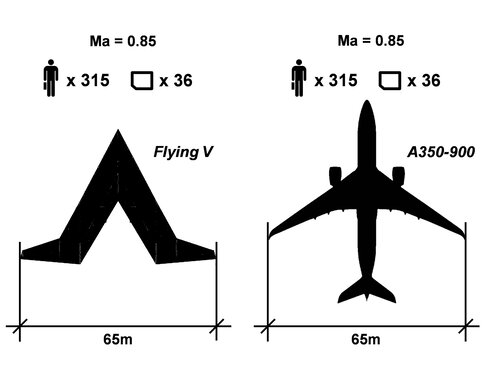
A streamwise cut through the oblique pressurized section of the Flying V is flat and elliptical and thus it fits efficiently into airfoils. This leads to both structural and aerodynamic efficiency. A patent application for the concept was filed by Airbus [1].
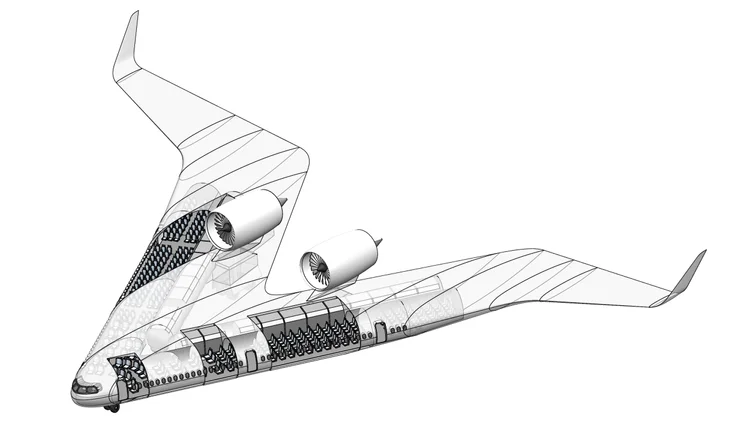
Remarkable is also the elliptical lift distribution of the stable design using only moderate wing twist and no reflexed camber lines. A radio controlled model of the Flying V was built to demonstrate these aerodynamic characteristics and support estimations and simulations which were made in this work.
The first flight of the glider version of the demonstrator model took place in Berlin, Germany on February 28, 2014:

The first flight of the powered version of the demonstrator model was in Hamburg, Germany on April 13, 2014:
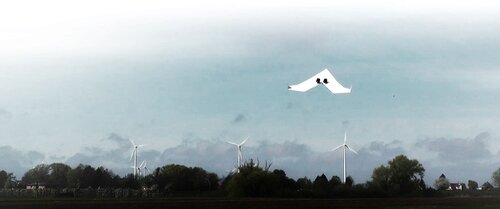
The pilot of the first powered flight was Simon Hinsch.
Presentation and flight videos:
For a full length video presentation with more details on the Flying V design see this news post from February 4, 2015.
The video highlights, including flight videos of the first demonstrator, can be watched in this video:
Flying V, Presentation at TU Berlin from Justus Benad on Vimeo.
NASA will soon test how quiet its X-59 really is over populated areas
NASA’s X-59 aircraft is designed to reduce the sound of sonic booms, allowing supersonic aircraft to surpass the speed of sound (767 mph) while flying over populated areas. And it will soon be put to the test, the space agency explained in a press release.
One of the issues with the Concorde — prior to its retirement in 2003 — was the fact that it would have to wait to leave city spaces and even sparsely populated areas before accelerating to Mach 1, as the sonic boom could damage property on the ground.
Get more updates on this story and more with The Blueprint, our daily newsletter: Sign up here for free.
Now, NASA’s X-59 could transform aviation by allowing supersonic aircraft to accelerate to those incredibly high speeds right after takeoff. The aircraft uses a thin 30-foot-long nose to lower the sound of the sonic boom.
In its latest update on the X-59, NASA announced several upcoming milestones, including its plan to fly the Lockheed Martin-produced X-59 QueSST prototype “over select communities to gather information about how the public perceives the quiet noise the X-59 is designed to produce (early 2024).”
A “quiet” sonic boom
NASA recently conducted the first successful tests of X-59 at its Glenn research facility following its assembly and transferral to Texas in December last year. The next milestone will see NASA and Japanese space agency JAXA take independent measurements of a small-scale model before comparing results. All going to plan, a target date will then be set for the first flight, expected to take place later this year.
The U.S. space agency will then conduct acoustic validation flights in 2023, followed by the planned community overflights in early 2024. After that “NASA plans to deliver results of the community overflights to the International Civil Aviation Organization and Federal Aviation Administration in 2027,” the space agency said in its statement. “With that information in hand, regulators will be able to decide if a change should be made in rules that prohibit supersonic flight over land – a decision that would be expected in 2028.”
NASA isn’t the only company planning to take supersonic aircraft to the skies once again. In an interview with IE last year, senior vice president of Boom Supersonic Brian Durrence said his company aims to “remove the barriers to experiencing the planet.” The company wants to build a fleet of supersonic aircraft that utilize sustainable aviation fuels and also minimize noise, compared to the Concorde, the reference point for supersonic passenger airliners. It hopes to begin carrying passengers by 2029.
If NASA and other private firms have their way, we may soon see commercial supersonic airliners take to the skies once more, drastically reducing travel times and reducing the barrier to entry for travelers worldwide while quietly breaking the sound barrier — at least compared to its predecessor.